
Street-level utilities and drainage systems, including catch basins and inlets, play a critical role in roadway safety and flood prevention. Preventative maintenance helps agencies reduce emergency responses and protect infrastructure investments.
This article outlines common standards-based practices supporting street utilities and drainage operations.
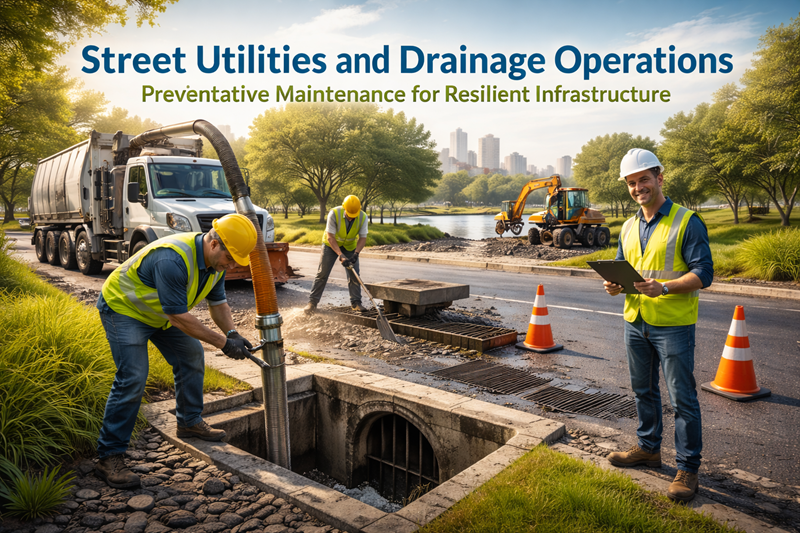
Scope of Street Utilities and Drainage Work
Municipal responsibilities often include:
- Catch basin inspection and cleaning
- Inlet and grate repair
- Minor drainage structure maintenance
- Emergency response to blockages or failures
- Coordination with stormwater programs
These activities often intersect with road maintenance and environmental compliance.
Inspection and Maintenance Planning
Preventative maintenance is central to drainage operations.
Common planning practices include:
- Routine inspection schedules
- Seasonal adjustments
- Asset condition assessment
- Prioritization based on risk and history
Planning supports efficient allocation of limited resources.
Safety and Environmental Considerations
Drainage work presents unique safety and environmental challenges.
Standards often address:
- Traffic control requirements
- Confined space awareness
- Proper debris handling
- Environmental protection measures
Clear procedures protect workers and the environment.
Documentation and Asset Tracking
Documentation supports asset management and compliance.
Common documentation includes:
- Asset location and condition records
- Maintenance history
- Repair documentation
- Citizen service requests
Consistent records support long-term planning and regulatory reporting.
Coordination with Other Public Works Functions
Drainage operations are closely tied to:
- Road paving schedules
- Utility projects
- Storm response activities
Coordination helps prevent rework and service disruptions.
Conclusion
A preventative, standards-based approach to street utilities and drainage operations supports infrastructure resilience and public safety. Documentation and coordination are key components of effective management.
Leave a Reply